ESHE Elections
In 2026, we will hold elections for the board officers in conjunction with the annual meeting. Listed below are the candidates running for the officer positions. Please take some time to read the candidates' statements before voting.
To see the list of the officers and regular board members past and present, see About Us.
Board Officers
President - Katerina Harvati
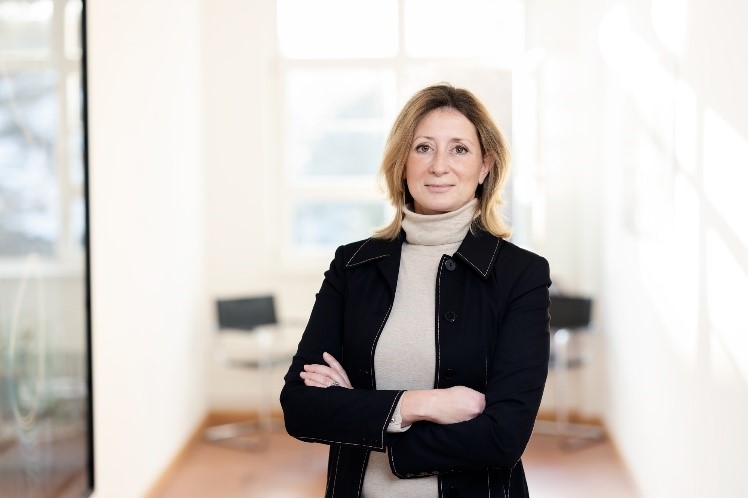
I am Professor for Paleoanthropology at the Institute for Archaeological Sciences and director of the Senckenberg Centre for Human Evolution and Palaeoenvironments, and main spokesperson of the new Cluster of Excellence on Human Origins at the University of Tübingen. My PhD is from the City University of New York (2001), and before coming to Tübingen I was Assistant Professor at New York University (2001-04) and Senior Researcher at the Max Planck Institute for Evolutionary Anthropology (2004-09). I am currently also adjunct Professor at the City University of New York. My research interests focus on the evolution of Pleistocene humans and modern human origins, as well as on the application of 3-D geometric morphometric and virtual anthropology to paleoanthropology. In addition to my laboratory and collections-based work, I conduct long-term field research, mainly in Greece.
I have been involved with ESHE since its inception: I am a founding member and have long served on the board (2011-12,2016-present), where I championed the development of the ethics policies of the society and the adoption of environmentally friendly practices for our conferences. I am strongly committed to equal opportunity and the promotion of women and underrepresented groups in science. I have served as President for two terms, since 2020 and elected again in 2023.
As President, I have worked to adapt our conference to the challenges of the pandemic and post-pandemic realities, including instituting a hybrid format to both increase inclusivity and reduce the conference’s carbon footprint. I also initiated ESHE’s collaboration with the Paleoanthropology Society to jointly publish the diamond open access journal PaleoAnthropology, which I co-edit since 2021, and spearheaded the move of the journal to a new electronic submission system and website, working towards getting it indexed. Earlier this year PaleoAnthropology was accepted by the Directory of Open Access Journals, and we plan a submission to Web of Science later this fall.
If elected to a third term, I will further promote these goals and work toward adapting ESHE to current and future challenges, including the rising inflation and future expense structure of the society and conferences. At the same time, I will provide continuity with the society’s original vision, and work to ensure its continuing success as a forum for discussion of cutting-edge work in human evolution studies.
I have been involved with ESHE since its inception: I am a founding member and have long served on the board (2011-12,2016-present), where I championed the development of the ethics policies of the society and the adoption of environmentally friendly practices for our conferences. I am strongly committed to equal opportunity and the promotion of women and underrepresented groups in science. I have served as President for two terms, since 2020 and elected again in 2023.
As President, I have worked to adapt our conference to the challenges of the pandemic and post-pandemic realities, including instituting a hybrid format to both increase inclusivity and reduce the conference’s carbon footprint. I also initiated ESHE’s collaboration with the Paleoanthropology Society to jointly publish the diamond open access journal PaleoAnthropology, which I co-edit since 2021, and spearheaded the move of the journal to a new electronic submission system and website, working towards getting it indexed. Earlier this year PaleoAnthropology was accepted by the Directory of Open Access Journals, and we plan a submission to Web of Science later this fall.
If elected to a third term, I will further promote these goals and work toward adapting ESHE to current and future challenges, including the rising inflation and future expense structure of the society and conferences. At the same time, I will provide continuity with the society’s original vision, and work to ensure its continuing success as a forum for discussion of cutting-edge work in human evolution studies.
Vice President - Ana B. Marín-Arroyo
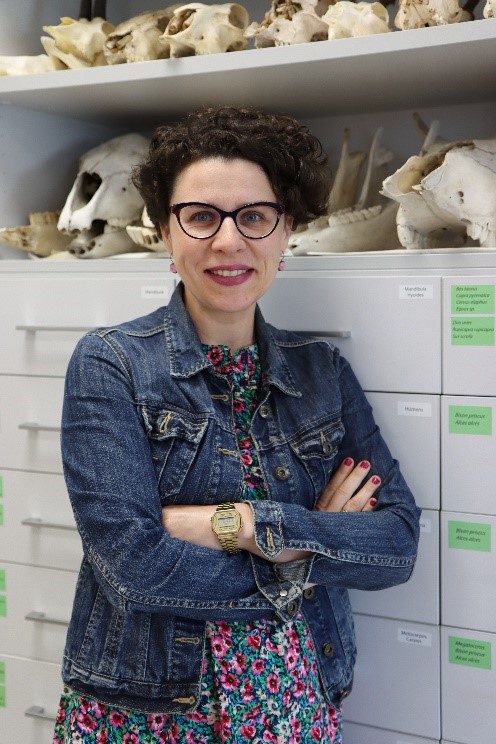
I am a Professor in Prehistory and Director of the EvoAdapta Research Group at the University of Cantabria, Spain. My research focuses on the evolution of human resilience to various climatic and environmental conditions during the Pleistocene and Holocene, with a particular emphasis on subsistence strategies. Recently, I ended the SUBSILIENCE ERC project, which provided new data and a final answer about how MIS3 climatic oscillations and the arrival of AMH affected Neanderthal decline across the continent. The results have been widely published in peer-reviewed journals and have enabled the training of a new generation of early-career researchers.
Between 2015 and 2021, I was an Affiliate Scholar at the McDonald Institute for Archaeological Research at the University of Cambridge. I regularly collaborate with multidisciplinary research teams in different institutions in a broad range of prehistoric fields. I have supervised postdoctoral researchers (with Marie Curie, Fyssen, JdC and other funded programmes) and directed four PhD dissertations and three ongoing PhDs. I have published several books and over 140 papers, primarily in JCR journals, and have served as a guest editor for three special issues. I actively participate in international scientific meetings and have been a Guest Lecturer at Spanish and European universities. Since 2024, I have been an associate editor of Quaternary Science Advances.
I have been an ESHE member since its foundation and regularly participate. As a board member, I have helped integrate Palaeolithic cultural research with anthropological evolutionary studies, promoting their integration in ESHE to achieve even greater outcomes. By following this approach, we can stimulate interdisciplinary research in a globalised world. My aim as Vice President remains in this line: stimulating communication and scientific cooperation among scientists and disseminating them to the general public.
Between 2015 and 2021, I was an Affiliate Scholar at the McDonald Institute for Archaeological Research at the University of Cambridge. I regularly collaborate with multidisciplinary research teams in different institutions in a broad range of prehistoric fields. I have supervised postdoctoral researchers (with Marie Curie, Fyssen, JdC and other funded programmes) and directed four PhD dissertations and three ongoing PhDs. I have published several books and over 140 papers, primarily in JCR journals, and have served as a guest editor for three special issues. I actively participate in international scientific meetings and have been a Guest Lecturer at Spanish and European universities. Since 2024, I have been an associate editor of Quaternary Science Advances.
I have been an ESHE member since its foundation and regularly participate. As a board member, I have helped integrate Palaeolithic cultural research with anthropological evolutionary studies, promoting their integration in ESHE to achieve even greater outcomes. By following this approach, we can stimulate interdisciplinary research in a globalised world. My aim as Vice President remains in this line: stimulating communication and scientific cooperation among scientists and disseminating them to the general public.
Secretary - Sireen El Zaatari
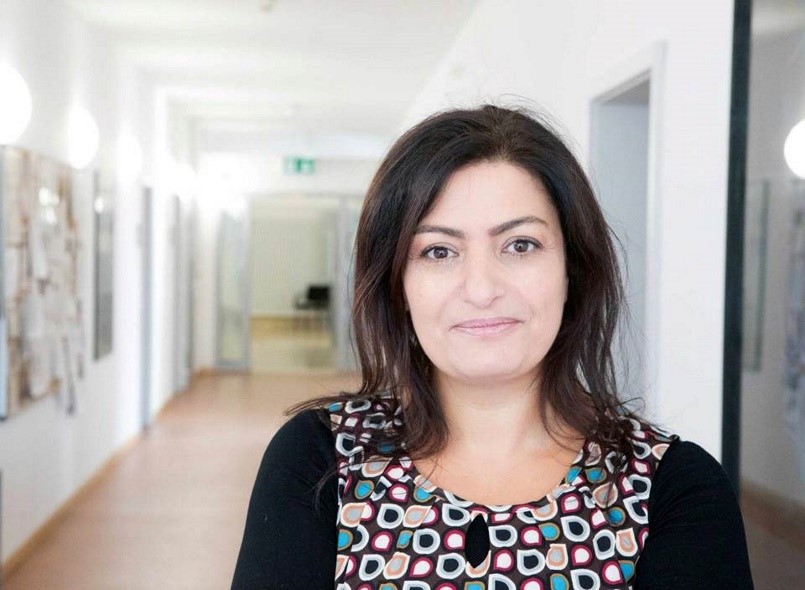
I am a senior researcher and lecturer in the Paleoanthropology Workgroup at the Institute for Scientific Archaeology, at the University of Tübingen. My research focuses on the use of dental anthropological approaches for the classification of hominin fossil teeth as well as for the reconstructions of diets and life history in Paleolithic hominins. In 2021, I was granted an ERC consolidator grant to run the REVIVE project, which aims to revive Paleolithic research in my home country Lebanon for the purposes of understanding hominin migrations and habitation of the central Levant. This project, is heavily based on archaeological fieldwork in Lebanon. I have been a member of ESHE since 2014 and participated in many of its annual meetings since then. I have also served on the organizing committees of EHSE 2021 virtual meeting and 2022 Tübingen meeting and since 2021 I am also responsible for compiling the abstracts volume. In 2020, I was elected as an ESHE board officer as a secretary. It has been a great pleasure serving the society and striving to maintain the success of its annual meeting for the past 3 years. I would be honored to continue with this service for a second term.
Adjunct Secretary - Amanda Henry
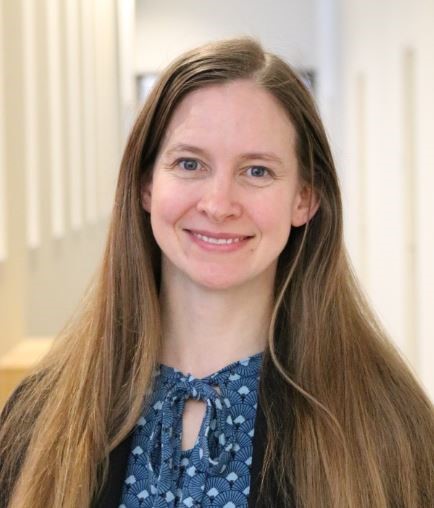
Though I was educated in the US, I have spent the majority of my post-PhD academic life in Europe, first as the leader of an independent research group at the Max Planck Institute for Evolutionary Anthropology in Leipzig, and now as a professor and vice dean for research in the Faculty of Archaeology at Leiden University. I’m broadly interested in understanding human diets in the past and how they may have shaped our evolutionary trajectory, with a focus on the use of plant foods. This question cannot be answered by one method alone, so I work both with modern people using an ethnographic and experimental energetics approach, as well as in the laboratory, analyzing plant nutritional properties and exploring how dental calculus is a record of human diet.
Serving as the adjunct secretary for the past six years, I have helped support ESHE's capacity for hybrid meetings that helps us reach a broader audience around the world. While I hope that we do not have to face similar challenges in the coming years, I am proud of how this adaptable and strong board kept ESHE going, and I am very happy to be part of the team. Over the next years, I hope to continue to foster a vibrant and inclusive ESHE, retaining the cross-disciplinary approach that makes it so special while making the best use of new technologies to help make it even more accessible.
Serving as the adjunct secretary for the past six years, I have helped support ESHE's capacity for hybrid meetings that helps us reach a broader audience around the world. While I hope that we do not have to face similar challenges in the coming years, I am proud of how this adaptable and strong board kept ESHE going, and I am very happy to be part of the team. Over the next years, I hope to continue to foster a vibrant and inclusive ESHE, retaining the cross-disciplinary approach that makes it so special while making the best use of new technologies to help make it even more accessible.
Treasurer - Martin Haeusler
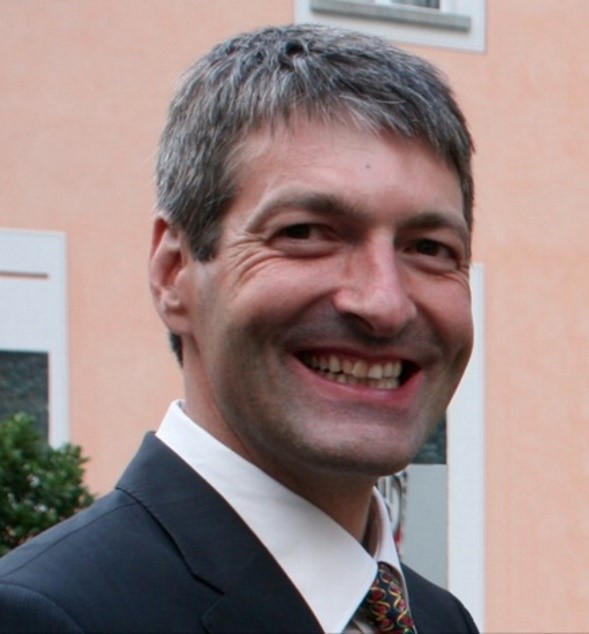
As both a palaeoanthropologist and physician I am interested in the question of how we got human and what characterizes us. My research focuses on the evolution of bipedal locomotion, human-like birth and birth difficulties, and how diseases shape our body and that of our ancestors, including australopithecines, Homo erectus and Neanderthals. To answer these questions, I am applying a range of different techniques such as comparative functional morphology, computer-assisted three-dimensional reconstructions, geometric morphometrics, biomechanical and metabolic analyses, and palaeopathology.
I studied anthropology and medicine at the University of Zürich with a PhD thesis on the evolution of bipedalism in Australopithecus africanus and a MD thesis on pathologies of the spine during human evolution. After a post-doctoral position at the Anthropological Department of the University of California, Davis, I lectured at the Anthropological Institute, University of Zürich, and was senior researcher at the Institute of Forensic Medicine as well as senior lecturer at the Institute of Anatomy in Zürich. It followed a clinical training in orthopaedics, general surgery, and internal medicine in various hospitals. Since 2013 I am leading the Evolutionary Morphology Group at the Institute of Evolutionary Medicine, University of Zürich. In addition, I am working in a small general internal medicine practice.
Since 2012, I have been a member of the ESHE and together with my students I have regularly presented my research at every ESHE meeting since then. In addition, I have served as ombudsperson of the ESHE since 2020. In 2023 I have become treasurer of the society and I would be happy if I could serve the ESHE for another 3-year term.
I studied anthropology and medicine at the University of Zürich with a PhD thesis on the evolution of bipedalism in Australopithecus africanus and a MD thesis on pathologies of the spine during human evolution. After a post-doctoral position at the Anthropological Department of the University of California, Davis, I lectured at the Anthropological Institute, University of Zürich, and was senior researcher at the Institute of Forensic Medicine as well as senior lecturer at the Institute of Anatomy in Zürich. It followed a clinical training in orthopaedics, general surgery, and internal medicine in various hospitals. Since 2013 I am leading the Evolutionary Morphology Group at the Institute of Evolutionary Medicine, University of Zürich. In addition, I am working in a small general internal medicine practice.
Since 2012, I have been a member of the ESHE and together with my students I have regularly presented my research at every ESHE meeting since then. In addition, I have served as ombudsperson of the ESHE since 2020. In 2023 I have become treasurer of the society and I would be happy if I could serve the ESHE for another 3-year term.